

The german stare

Whenever you speak to an expat or foreigner about experiences in Germany, it is almost inevitable to hear them talk about the fact that they feel being stared at in Germany. „I just stood there in the metro and people were staring at me, and staring even when they realized I noticed. Why is that?“ - The German stare. So much has been discussed or mentioned about this phenomenon, but mostly people just recognize it, without really knowing why this happens. So let’s dive a bit into German peculiarities:
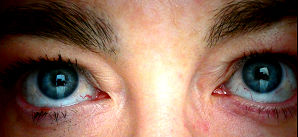
Roughly speaking – the German stare can have multiple reasons. Let it be just looking at you because you look different, or wear something different, or doing something odd. In most of the cases, I would say, it is that you don’t obey a rule which the others follow but you don’t.
Just as an example: During the pandemic time it was mandatory to wear a mask in public transport. So if you were not wearing one, people would stare at you. And if you looked back, they wouldn’t avoid the eye contact, but „stare on“. It translates to: „We are obliged to wear a mask, so why don’t you follow the rule?“
I collected some situations which trigger the „German stare“ to give you a feeling for the pattern plus the reasons for them. At the end, I’ll tell you how to avoid and „survive the stare“.
Here are the classic situations where foreigners almost instantly trigger “the German stare”—these are so consistent that locals will recognize them immediately:
1. Crossing on red (especially with kids around)
This is the number one trigger.
If you cross while the pedestrian light is red—even if the street is empty—you’ll often get:
Disapproving looks
Head shaking
Sometimes even a comment
Why? Because it’s seen as setting a bad example, especially for children.
2. Standing on the wrong side of the escalator
On escalators (especially in big cities like Berlin / Cologne / Frankfurt / Hamburg / Munich):
Right side = stand
Left side = walk
Block the left side and you’ll feel the stare immediately—often followed by a very direct “Links gehen!” (“Walk on the left!”).
3. Being loud on public transport
Talking loudly, playing music, or taking calls on speaker in trains or buses is a fast way to get noticed.
Particularly on systems like the U-Bahn:
Loud = inconsiderate
Quiet = expected baseline
You may not get told off—but you will get looked at.
4. Breaking quiet hours (Ruhezeiten)
Typical quiet times:
Late evenings (~10pm onward)
Sundays and holidays
Doing things like:
Vacuuming
Drilling
Loud music
→ instantly triggers neighbour radar
5. Walking in the bike lane
Bike lanes are sacred territory.
Step into one absentmindedly and:
Cyclists may ring aggressively
Bystanders may stare like you just broke a law
In cities, this is taken very seriously.
6. Supermarket checkout inefficiency
German checkouts are FAST. Unfortunately, there is nobody to help you packing up your groceries. So hurry up. ;-)
Common “mistakes”:
Packing too slowly
Not having payment ready
Blocking the line
You’ll feel pressure from:
The cashier
The people behind you
And yes… the stare
7. Not holding doors / ignoring queue order
Germans value orderly flow:
Cutting in line → major offense
Not acknowledging who’s next → frowned upon
Letting a door slam behind you → noticeable
It’s less about politeness and more about fairness and structure.
8. Recycling “wrong”
Germany takes recycling seriously.
If you:
Put glass in the wrong bin
Mix trash incorrectly
Neighbours might not confront you—but if they see it…let’s just say you’ve been noticed.
9. Ignoring personal space
Standing too close in line or sitting right next to someone in an otherwise empty train carriage can feel intrusive.
This one triggers more of a confused stare than an angry one.
10. Loud phone calls in quiet environments
Especially in:
Waiting rooms
Trains
Small cafés
Speaking loudly on the phone = instant attention.
The pattern behind all of these - you’ll notice a theme:
- It’s rarely about being “rude” in a moral sense- It’s about disrupting order, efficiency, or shared comfort
That’s why the reaction is often:
Silent
Direct
Immediate
Quick survival rule:
If you find yourself in such a situation or a similar setting, it is well worth checking if all the others (or the vast majority) do something you don’t and adjust. The stare can be accompanied by the certain „tzzz“ -sound.
Conclusion:
If you want to avoid “the stare” in Germany, then ...
Be aware of your surroundings + follow the flow
Move efficiently
Stay quiet in shared spaces
Respect visible systems (lanes, queues, signals)
I regularly share articles about living abroad and relocating to Germany, highlighting common questions and adjustments people often face when moving to a new country. If you would like personal coaching during this transition, I will be happy to support you, just contact me.
Photo / source: own


